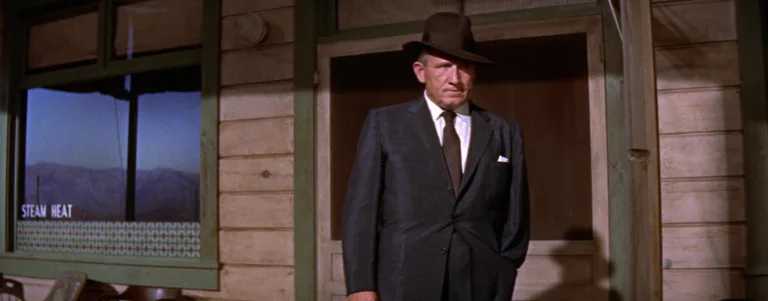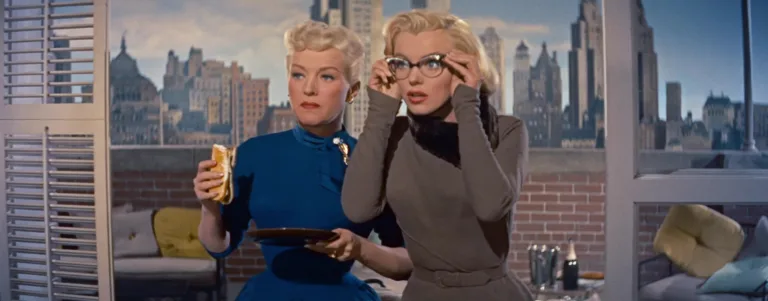
Aspect Ratio 2.55:1
Step back into the mid-1950s, the era of “the miracle you see without glasses.” The 2.55:1 aspect ratio was the initial standard for CinemaScope, launched by 20th Century Fox to entice audiences away from their television sets. This ultra-wide, panoramic frame offered a more expansive view than almost any format that followed. On CinematicFreeze, our 2.55:1 galleries highlight the vibrant Technicolor and experimental compositions of the early widescreen revolution.
Why 2.55:1 is the “Widest” Standard Scope
When CinemaScope debuted with The Robe (1953), it used a 4-track magnetic sound system. Because the sound was stored on “stripes” outside the image, the picture could occupy a massive 2.55:1 area. However, this required theaters to install expensive new sound systems. By 1957, the industry moved to the 2.35:1 ratio to make room for a standard optical soundtrack, making the 2.55:1 frame a rare and beautiful relic of a specific four-year window in film history.
Essential 2.55:1 (Early Scope) Galleries
Discover the grand experimentation of early widescreen through these curated archives:
- A Star Is Born (1954): Director George Cukor used the 2.55:1 frame to create sophisticated, “unfolded” compositions that allowed actors to move horizontally across the screen without the need for frequent cuts.
- East of Eden (1955): Elia Kazan used the 2.55:1 ratio to emphasize the literal and emotional distance between characters, often placing James Dean at the extreme edge of the wide frame.
The Visual Hallmark of 2.55:1
When browsing 2.55:1 stills, you are looking at the birth of modern cinematic blocking:
- Horizontal Ensembles: This ratio allowed for the “clothesline” style of staging, where several actors could stand in a single plane, creating a theatrical but immersive experience.
- Technicolor Brilliance: Most 2.55:1 films were high-budget spectacles shot in vibrant color to show off the new technology.
- Experimental Framing: Because directors were still learning how to use such a wide space, you’ll see unique uses of “negative space” that feel different from the more polished 2.39:1 films of the 1970s.